

By: Josh Droll
FAYETTEVILLE, Ark. (UATV) — According to The Economist, President Donald Trump is at his lowest point in the polls since he first took office in 2016. The latest polls come as a reaction to events like the Iran War, the public feud with Pope Leo XIV, and rising prices domestically. However, the dipping pole numbers also follow a much larger trend.
According to a January 2026 poll from Gallup, when the economy does poorly during one party’s time as president, the other party gains a boost in support. Especially in modern America, where four out of every 10 adults consider themselves independent. That’s exactly what Assistant Professor of Political Science Karen Sebold said she thinks happened during former President Joe Biden’s administration.
“Harry Truman, president back, you know, several decades ago,” Sebold said. “[He] said ‘the buck stops with me because I’m the president.’ So ultimately, that is true.”
In particular, Sebold said the Americans who suffered the most during Joe Biden’s administration were the middle and lower classes, especially those without investments or property. She said that was perhaps the biggest driver behind the surge in voters that ultimately made Donald Trump the president-elect for his second term.
On his campaign trail, he said he would lower taxes, be tough on immigration, and be a “no wars president.” However, with the United States now involved in the war in Iran, those promises are starting to backfire for all parties alike.
“As much as he may have been liked when he was brought into office, well, now the inflation is still there,” Sebold said. “And even worse, it’s raging even higher because of, you know, the Iran war. Perhaps other factors as well.”
Yet, despite the rampant public opposition, Congress remains gridlocked on a number of issues. That’s because votes in both the House and the Senate are becoming increasingly partisan. However, Sebold says the divide between Democrat and Republican stances also persists off of the Congress floor.
“What’s happening in Congress is honestly a reflection of what’s happening in American society,” Sebold said. “So some would say, ‘Hey, Congress isn’t going to change until American society changes’…because when I was a college student, I had friends from all political stripes. I didn’t make my friends based on what their politics were. But that is so changed. We make all of our life choices now based on politics. So we’ve polarized ourselves.”
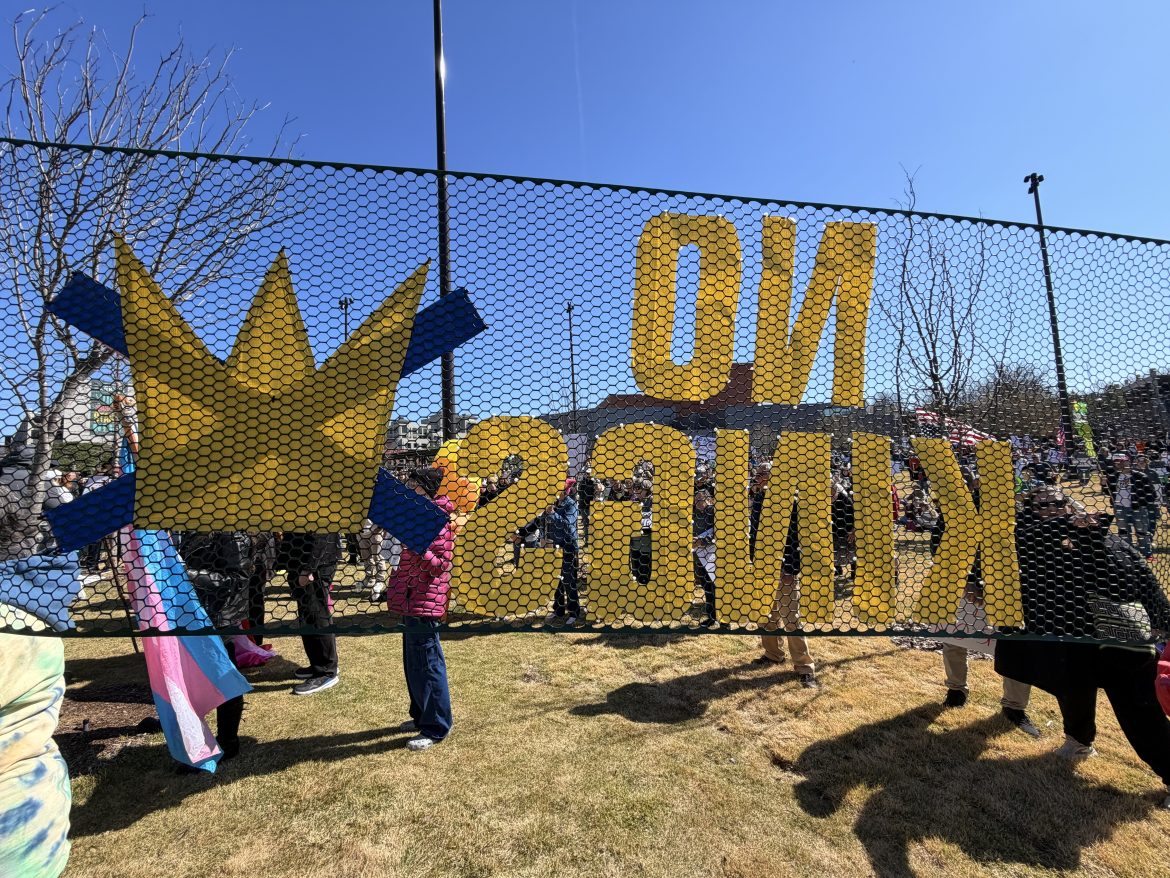
Groups on both sides are trying their best to bridge that political divide, despite the hardships and growing tension. One of those groups, Indivisible NWA, is co-led by Maritza Munich. Her group is a branch of an international group fighting fascism, like she was back in March, with the No Kings Protest.
In addition to being part of Indivisible and an attorney, she’s also a grandmother. Munich says the responsibilities that come with all of those roles is why she arranges these protests.
“If I don’t do this,” Sebold said, “who’s going to do this for them? Who’s going to work for a better future for them? That’s why I’m here.”
The other group advocating for peace is not an advocacy organization; in fact, they’re meeting for service on a warm Spring night just outside of Razorback Stadium. Baptist Collegiate Ministry, alongside other ministries on campus, is doing its part to bring its community together.
McKenzie Burnett, a Christian and an independent, said she is frustrated about the state of the world right now. But, if there is anything her faith has taught her, it’s how to forgive and forget.
“Everybody is so hateful,” Burnett said, “and everybody cares so much about what everybody’s doing. I couldn’t care less about what you’re doing. That’s not my business.”