

By: Tyler Glasscock
FAYETTEVILLE, Ark. — University of Arkansas students are helping reshape the Horticulture Study Garden, working to improve a space that provides hands-on learning while building a vision for its future.
For Horticulture Club President Jackson Ball, the goal extends beyond giving students a place to identify plants. He wants the garden to draw people in and spark an interest in horticulture.
“My vision is a place for not only horticulture students to come through,” Ball said. “I want people to walk through here and be in awe.”
The garden serves as an outdoor classroom where students collect samples, study plant taxonomy and practice identifying plants. Instead of relying solely on pictures or textbooks, students examine leaves, flowers and the way leaves grow along a stem.
Ball said that experience helps students move beyond seeing plants as a “green blur” and begin recognizing individual species. Their coursework also explores which plants are suited to different environments, including those that thrive in rain gardens.
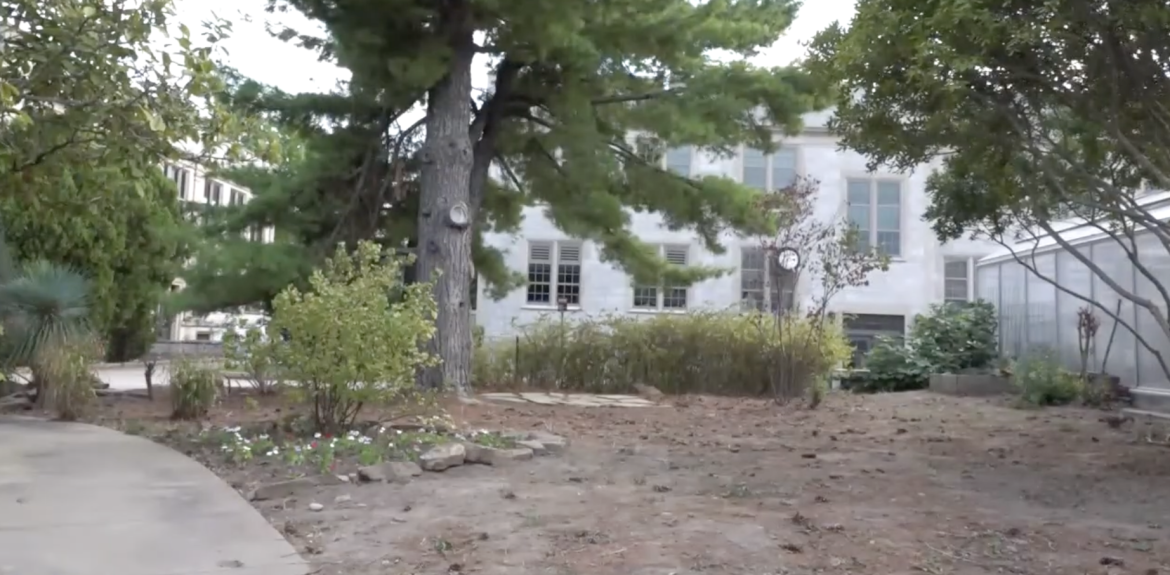
Students have taken on a larger role in maintaining the space following the departure of a horticulturist who cared for it, according to Ball.
“After she left, it kind of went into disarray,” Ball said.
221ac80378094202b23ad1b572366861 3
As questions arose about who would maintain the garden, Ball saw an opportunity for the Horticulture Club to get involved.
The club recently held a cleanup, raking leaves and moving rocks. Student interns also contributed over the summer by removing existing plants, planting beds and spreading mulch, Ball said.
Those opportunities allow students to gain experience developing garden spaces while putting classroom lessons into practice.
“That’s where I thrive,” Ball said. “The hands-on and, you know, that whole aspect of horticulture and making things pretty.”
The club is also considering ways to approach the work in smaller sections. Ball pointed to “pollinator pockets,” an idea he discussed with Jenny Vance of Grow Native Bella Vista, as one possible starting point. The approach would involve preparing soil with compost before planting.
Beyond maintaining the garden, Ball hopes future improvements will encourage more people to spend time there. In a landscape design class, students developed ideas for the space, including seating where visitors could study or eat lunch.
Ball said making the garden more inviting could introduce students outside the horticulture program to the field.
“I want people to come out here and be like, ‘Oh my gosh, this is such a beautiful space,’” Ball said.
For students interested in helping, Ball said joining the Horticulture Club is a way to get involved, even without being a horticulture major. He said members have shown a clear preference for activities that get them working with plants.
“They want to be in the soil,” Ball said. “They want to be getting their hands dirty.”
The improvements will take time. Ball described the effort as a slow-moving project, but said the work completed over the summer shows how the garden can continue to develop.
Although he graduates in December, he hopes to return and see the results of future students’ contributions.
“I would like to come back in two years and see some evolution here,” Ball said.