

By: Catherine Spicer
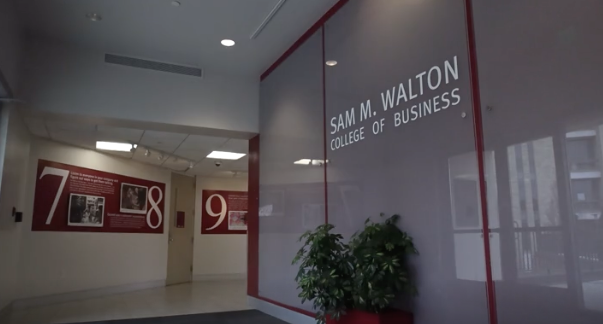
FAYETTEVILLE, Ark. (UATV) — The UofA’s Sam M. Walton College of Business is celebrating its 100 year anniversary.
Dean Brent Williams outlined a plan for the future of the college with the goal of bringing education, research and industry closer and said that as business changes with new technologies such as artificial intelligence, business education needs to evolve also.
“Our opportunity is to leverage the extraordinary business ecosystem around us into an equally extraordinary model of business education,” Williams said in a press release. “That’s why our aspiration for the next five years — and the launch of our second century — is for the Walton College to function like a living laboratory for business: a highly applied business school that creates day-one-ready graduates and research that makes a difference in business and society.”
To pursue that ambition, the college’s 2026-2031 strategic plan uses three “strategic big bets” which include scale applied and experiential learning, accelerate applied and translational research and embed an entrepreneurial mindset.
“A century of progress is worth celebrating, but our greatest responsibility is to what comes next,” Williams said. “We honor the people who built our first 100 years by being just as bold about the next 100 — by building the college our students, our state and the world will need.”
The college gained its name with a $50 million gift from the Walton Family Charitable Support Foundation in 1998. The donation also accelerated investment in students, faculty, research, technology and academic programs. The college also established the Arkansas Business Hall of Fame in 1999 to honor leaders whose accomplishments have brought lasting distinction to Arkansas.
“The history of Walton College demonstrates what is possible when ambitious ideas are matched with extraordinary people and a commitment to serving others,” UofA Chancellor Charles Robinson said in a release. “As the college enters its second century, it is creating new opportunities for students while extending the university’s impact across Arkansas and beyond.”