

By: Hope Durkee
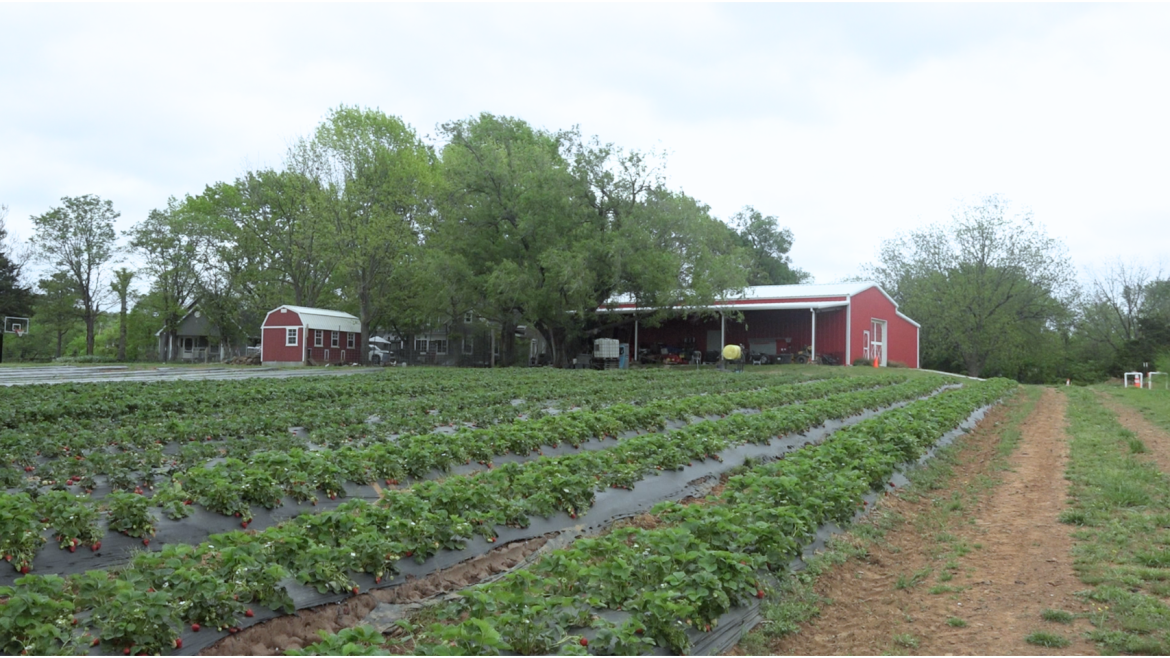
FAYETTEVILLE, Ark. (UATV)— Berry farmers in Northwest Arkansas have had to navigate extreme temperatures late this winter and into spring. This affects their crop production, harvest timeline and operation costs.
William Reagan, of Reagan Family Farms, said the roller coaster of temperatures is something he’s never witnessed.
“We’ve never seen 80 degree days in February that I knew of,” Reagan said. “Then three weeks later, we’re down in the 20s with the wind chill in the single digits. It’s hard on the plant.”
Fayetteville experienced the warmest March it has ever had with an average temperature of 60.3 degrees. Temperatures ranged from a high of 94 all the way down to 19, leading to plants coming in ahead of schedule.
“We were really about— as far as a growing season goes—two weeks ahead of where we normally were,” Colin Massey, Washington County Extension Agent, said. “So, we had things flowering and leafing out a lot sooner, and that tender growth is much more susceptible to cold damage.”
Some of this shift may be due to a changing climate. In 2023, Northwest Arkansas changed growing zones, moving from zone six to zone seven. This means that the area’s overall average temperature is higher. Massey said that while it is only a few degrees different, “there are crops that could certainly be sensitive to that.”
Researchers have begun to look at different plant varieties that may be more adaptable to the area since the temperatures have been increasing.
Reagan said that he has seen a difference. In a dozen prior growing seasons, Reagan said they had never picked sooner than April 12. This year, however, was a different story.
“This year we started picking on March 31st, which is insane,” Reagan said. “We would have been picking earlier if it wasn’t for a really hard freeze that came in.”
Maintaining more than 38,000 plants is not cheap. Reagan said the biggest concern moving forward is all the input costs.
“Our water bill went up, our electricity went up 30%,” Reagan said. “It’s all those costs. By the end of the year, you’ve got to have some money in the bank.”
The Extension Office works to help farms manage these costs along with assist them in insect and disease issues. Massey said they aim to be a place of support.
With droughts becoming more common, the main future concern is having to water more throughout the year. This will continue to increase operation costs. Massey said that some farms have already had to start watering plants during the winter.
Even with all these challenges, Reagan said there is still value in local farms because money stays in the area, which helps strengthen the community.