

By: Sofia Galvan
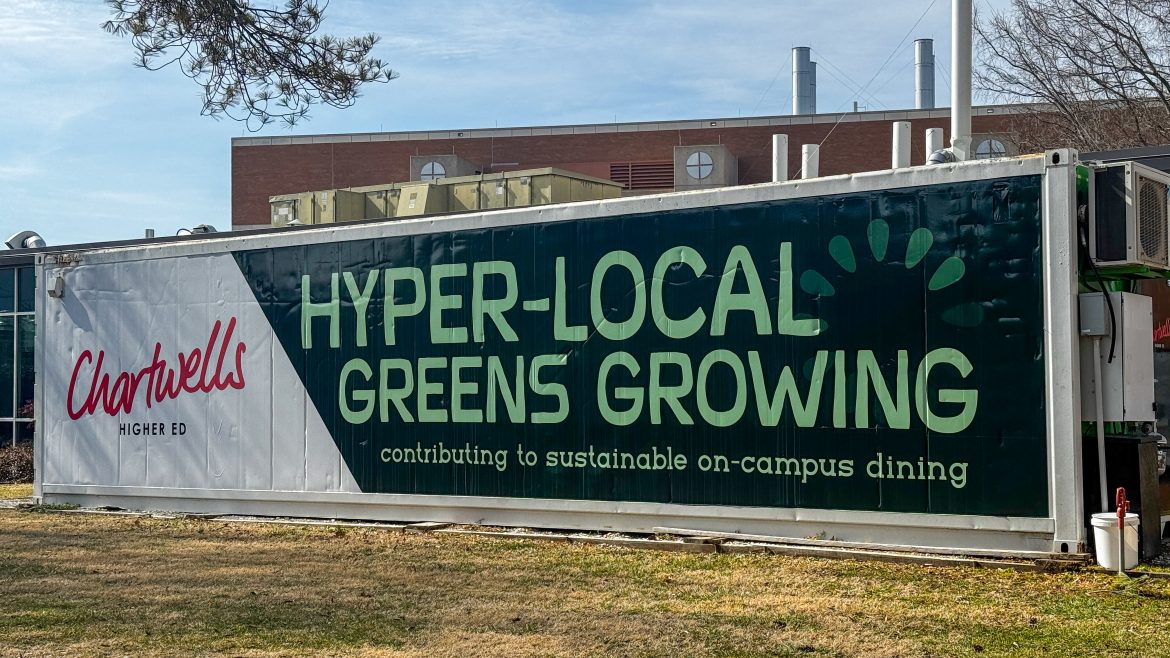
FAYETTEVILLE, Ark. (UATV) – The pink and purple lights that glow inside a University of Arkansas shipping container may look a bit strange, but they are growing the lettuce students eat on campus.
The campus freight farm uses red and blue lights, which appear pink and purple, to replicate the exact spectrum the butterhead lettuce needs for photosynthesis to happen. It also uses a hydroponic system that grows plants without soil and with just 10 gallons of water a day. This combination produces more than 3,000 heads of lettuce at one time while using 90% less water than your regular farming.
The hydroponic farming method allows the farm to control the growth of the lettuce. This means the control of the humidity and light exposure produces the same quality harvest in June as in December. The weather outside will not affect the lettuce growing inside.
The 40-foot container is packed with more than 260 vertical towers that hold the butterhead lettuce grown from beginning to the end and eventually end up at Where the Wild Greens AR and campus dining halls like Fullbright. Students eating at these locations may have no idea they are trying extremely local produce.
Two student interns manage the daily to-do list, working 10 to 20 hours a week to make sure the farm stays running. They do everything from planting to the transportation of the butterhead lettuce to campus dining locations. The freight farm harvests up to 500 heads of lettuce a week and has harvested a total of more than 12,000 since 2016.
Campus dietician Andie Woodring, who manages the farm through Chartwells Higher Education, said the farm influenced her to add sustainability to her professional background. Woodring oversees the student interns and said the farm’s location on campus makes accessible produce without the need for acres of land.
“My favorite part is really just getting to watch students flourish in an environment they care about,” Woodring said.
The freight farm interns are typically familiar with the way the farm operates due to their backgrounds in food science or hydroponics. Woodring said the farm gives students who work there real-world problems to solve almost daily, from adapting to equipment issues to managing the harvest from start to finish.
Woodring said that if students are interested in learning more about the freight farm, they can access the on-campus website. Those who would like a deeper dive into the hydroponic container can email her directly.