

By: Wisdom Harlan
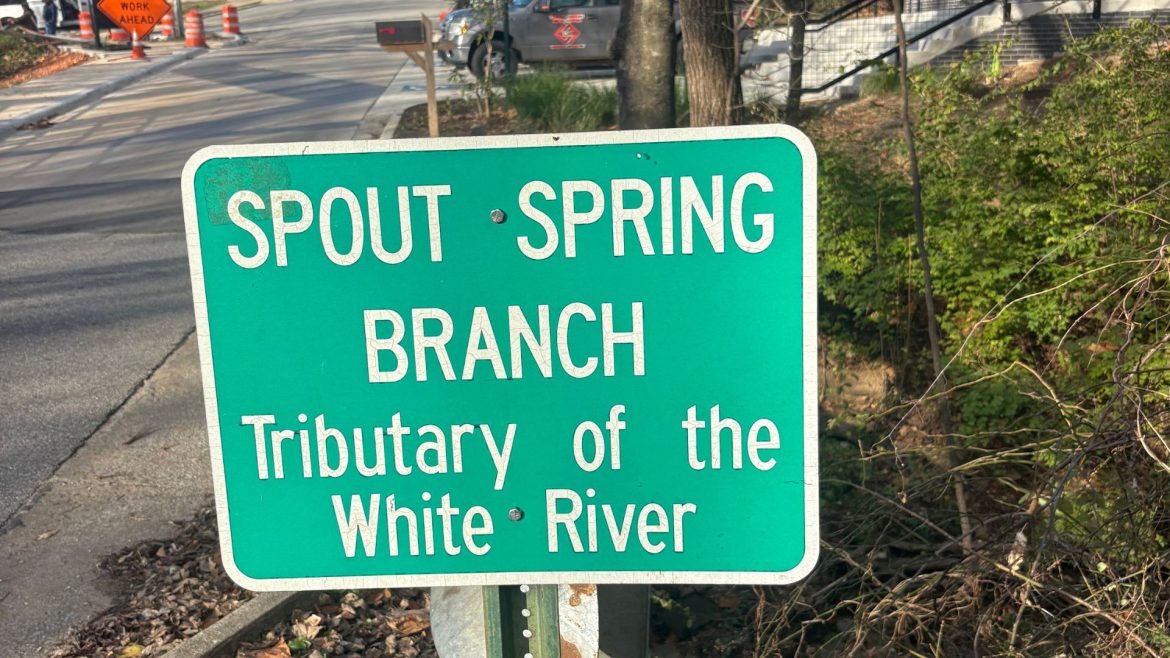
FAYETTEVILLE, Ark. (UATV) – This year marks one year since the Spouts Spring Branch area in southeast Fayetteville was formally recognized as Northwest Arkansas’ only historic Black district. The designation aimed to honor generations of Black families who shaped the city’s story. But the once tight-knit neighborhood has become prime real estate, with construction companies replacing longtime homes with modern properties geared toward young adults desiring to live downtown.
For lifelong resident Tammy Perry, the district is more than land to be redeveloped. It is her childhood and a place where every block held a memory.
Standing in front of her childhood home at 217 W. Center St., she reflects on how much has changed. “This is my childhood home,” she says. “Smaller homes are slowly vanishing… two were torn down just across the street.”
Gentrification continues to reshape Spouts Spring Branch. New townhomes rise on lots where family houses once stood.
As she drives through the neighborhood, Perry points out landmarks that exist only in her memory.
“This used to be a JCPenney’s,” she says, passing a modern storefront. Seconds later, she finds another building. “…back when it was pianos and stuff.”
For Perry, the transformation isn’t just physical, it’s emotional. She recalls the families and the businesses that defined her childhood. Watching the last pieces of that history disappear she says.
The City say they recognize the pressure the neighborhood faces and the importance of preserving what remains. Fayetteville’s long-range planning team says it was designed to document the stories, architecture and cultural identity of Spouts Spring Branch before they are lost.
“We wanted to highlight the people who are part of Fayetteville’s history,” said Britton Bostic, long-range planning manager. “Preserving this district helps set the context for the decisions we’re making today.”
Over the past year, the city has worked with residents to collect oral histories, identify historic structures and map cultural landmarks. Officials say these records will guide future development and help protect the district’s identity.
The city acknowledges that growth is happening fast, but argues that documentation, historical recognition and community involvement can help balance development with preservation.
Perry continues to drive the same streets she has known all her life. She remembers every home, every business and every neighbor. She still knows every turn. But the neighborhood in her rearview mirror is no longer the one she grew up in.
What remains now is a shared responsibility, to preserve the stories of Spouts Springs.