

By: Ellisyn Sanders
FAYETTEVILLE, Ark. (UATV) — October includes several national events focused on mental health, such as Mental Illness Awareness Week and World Mental Health Day. The month encourages people to check in on themselves and others and to keep conversations about mental well-being going.
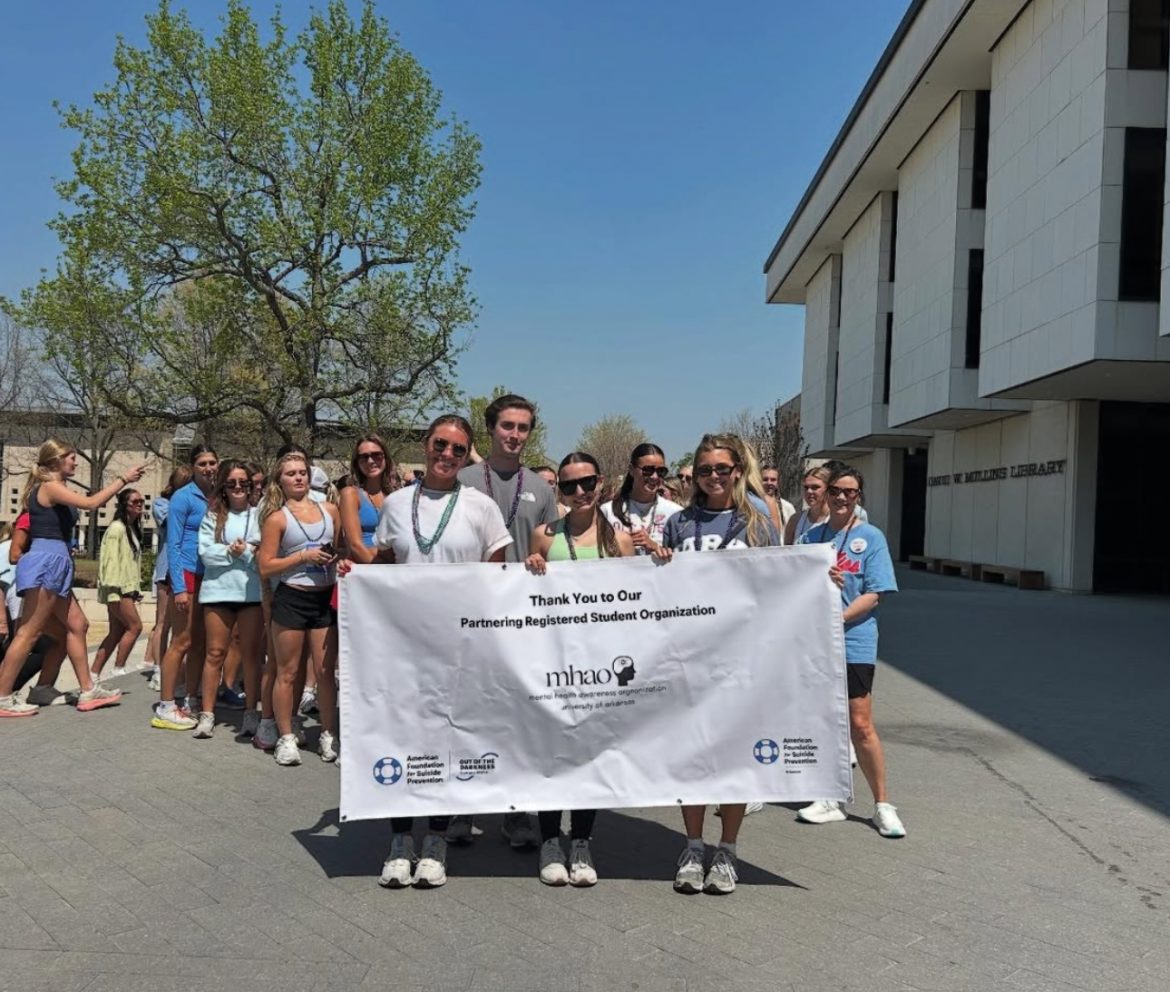
At the University of Arkansas, one student organization is helping make those conversations a regular part of campus life. The Mental Health Awareness Organization, or MHAO, was created to give students a safe space to talk about mental health and help break the stigma around it.
“The Mental Health Awareness Organization was founded to create a safe space for students and break the stigma surrounding mental health struggles on campus,” said MHAO Vice President Anna Wimberley. “We want to familiarize students with what mental health really is, as it is not one-size-fits-all all, then spark conversation about it.”
Wimberley said she joined the group after noticing how many people around her were struggling in silence.
“Personally, I got involved because, like most people, I’ve experienced a few struggles of my own. I noticed that so many people around me were going through similar things, but no one was talking about it,” she said. “I then learned that sometimes all it takes is checking in on someone or asking how they’re doing to change the narrative.”
She said many students face similar challenges when they first come to college, including homesickness, loneliness, stress and pressure to do well.
“When you’re in a new town and a completely new environment, it can also be difficult to know where to go for resources,” Wimberley said. “Asking for help and reaching out is, I think, one of the hardest parts of dealing with mental health struggles. What we try to do is remind people they aren’t alone, so many students are going through the same things; you just might not realize it.”
“Reaching out for help is a sign of strength, not weakness, and there are people and resources here who genuinely want to support you: from CAPS and MHAO to peer communities who understand what you’re going through,” she said.
Wimberley said MHAO hopes to help make mental health a normal and ongoing part of campus life, not just something talked about during awareness events.
Students seeking mental health support can contact Counseling and Psychological Services, or CAPS, at the Pat Walker Health Center or visit health.uark.edu for more information.